Every Graco tip number reads the same way. First digit times two = fan width in inches, measured twelve inches from the surface. Last two digits = orifice size in thousandths of an inch. So an LTX517 sprays a 10 inch fan through a 0.017 inch orifice. Orifice controls how much paint comes out. Fan width only controls how wide it spreads. Pick the orifice to suit your material and your sprayer's maximum, then pick the fan to suit the surface. For most latex on walls, a 515 or 517 is the right place to start.
Tips are the cheapest serious component on an airless sprayer and the one that decides how your finished surface looks. They are also stamped with a number that most people cannot read, so they buy whatever came in the box last time and hope.
This is the complete reference: how the numbering works, what each part of the number actually controls, how to find the biggest tip your machine can handle, and how to tell when a tip has quietly stopped doing its job.
1. How to Read Any Tip Number
Take a tip off the gun and look at the handle. You will see letters followed by three or four digits. That label contains everything you need.
LTX517: a standard RAC X tip that sprays a 10 inch fan through a 0.017 inch orifice.
The fan digit
Double the first digit and you have the approximate fan width in inches when the tip is held twelve inches from the surface. A 3 means a 6 inch fan. A 5 means 10 inches. A 6 means 12 inches. Hold the gun closer or further away and the actual width changes, which is why the twelve inch reference distance matters.
The orifice digits
The last two digits are the diameter of the hole in thousandths of an inch. A 15 is 0.015 inches. A 21 is 0.021 inches. This is the number that determines how much paint leaves the gun per minute, and therefore the number that matters most.
Four digit numbers
Wide fan tips carry a two digit fan code. WR1229 reads as a 12 in the fan position, so a 24 inch fan, through a 0.029 inch orifice. Same rule, just a bigger number in front.
Three worked examples
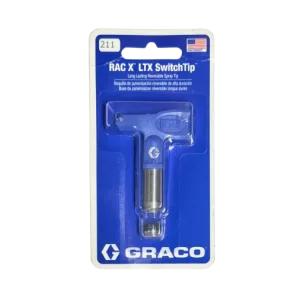
- LTX211: fan digit 2, so a 4 inch fan. Orifice 0.011 inches. A small, precise tip for trim, spindles and thin materials.
- LTX415: fan digit 4, so an 8 inch fan. Orifice 0.015 inches. A versatile tip for doors, cabinets and smaller walls.
- LP519: low pressure family, fan digit 5, so a 10 inch fan. Orifice 0.019 inches. Heavier latex on large walls, sprayed at reduced pressure.
2. The Full Size Chart
Fan digit to fan width
| First digit | Fan width at 12 in | Typical surface |
|---|---|---|
| 1 | 2 in | Spindles, railings, fine detail |
| 2 | 4 in | Trim, window frames, narrow boards |
| 3 | 6 in | Doors, cabinets, baseboard |
| 4 | 8 in | Cabinet sides, small walls, fencing |
| 5 | 10 in | Interior and exterior walls, siding |
| 6 | 12 in | Large walls, ceilings |
| 7 to 8 | 14 to 16 in | Commercial walls, large exteriors |
| 12 (WideRAC) | 24 in | Warehouse walls, large flat commercial surfaces |
Orifice to flow rate
This is the table that tells you whether your sprayer can actually feed a tip. Flow figures are approximate, measured with water at 2,000 PSI. Paint is thicker than water, so real flow runs somewhat lower, but the relative differences hold.
| Orifice | Approx. flow (water, 2,000 PSI) | Relative to a .015 |
|---|---|---|
| 0.009 | 0.09 GPM | Well under half |
| 0.011 | 0.12 GPM | About half |
| 0.013 | 0.18 GPM | About three quarters |
| 0.015 | 0.24 GPM | Baseline |
| 0.017 | 0.31 GPM | About a third more |
| 0.019 | 0.38 GPM | About 60% more |
| 0.021 | 0.47 GPM | Roughly double |
| 0.023 | 0.57 GPM | More than double |
| 0.025 | 0.67 GPM | Close to triple |
| 0.027 | 0.78 GPM | More than triple |
Flow does not rise in a straight line with orifice size. Each small step up in the orifice number adds proportionally more paint than the last, because flow follows the area of the hole rather than its diameter. Going from a .015 to a .021 looks like a small change on the label and roughly doubles the paint leaving the gun. That is why one size too large is enough to overwhelm a smaller pump.
3. The Biggest Tip Your Sprayer Can Run
Every airless sprayer has a published maximum tip size. It is not a suggestion. It reflects how much material the pump can physically deliver per minute while holding pressure.
Here is the useful connection. A sprayer's rated maximum flow and its rated maximum tip normally line up with the flow chart above. The Magnum X7 is rated at 0.31 GPM with a maximum tip of 0.017, and the chart shows a 0.017 orifice flowing about 0.31 GPM. The machine is sized to feed exactly its largest rated tip and no further.
What happens when you go over
- The pattern tails. The pump cannot hold pressure, so the fan develops heavy lines at the top and bottom edges instead of feathering out evenly.
- The pump runs continuously. Instead of cycling, it strains at full effort trying to keep up.
- Wear accelerates. Packings, valves and the motor all work harder than their design point. The damage does not show immediately. It shows months later as a repair.
Your sprayer's maximum tip is in its manual and spec sheet. If you do not have the manual, look it up in our Graco manuals and technical data library. Buying a tip one size over your machine's limit is the single most common tip mistake, and the label will not warn you.
Also worth knowing: every extra spray gun running off one pump divides that flow. Two guns on a pump rated for a 0.021 tip means each gun should run something closer to a 0.015.
4. Matching Orifice to Material
Thicker materials need larger openings to atomize properly. Thinner materials need smaller ones, or they will run and sag because too much goes on at once.
| Material | Orifice range | Common starting tips |
|---|---|---|
| Lacquers, clear finishes | 0.008 to 0.011 | FFLP210, FFLP310, LTX211 |
| Stains, sealers, enamels | 0.011 to 0.013 | LTX311, LTX313, LTX213 |
| Oil based and latex enamels | 0.013 to 0.015 | LTX313, LTX315, LTX415 |
| Primers | 0.015 to 0.019 | LTX415, LTX517, LP515 |
| Interior latex walls | 0.015 to 0.017 | LTX515, LTX517, LP515 |
| Exterior latex, heavy latex | 0.017 to 0.021 | LTX517, LP519, LTX521 |
| Elastomerics, block filler | 0.021 to 0.035 | Large LTX, check pump rating |
Two adjustments to this table in the real world. If the material is running or sagging, drop one orifice size. If the fan is tailing and turning up the pressure does not fix it, the material may need one size larger, provided your machine can support it. Always check the coating manufacturer's data sheet, which often lists a recommended tip range directly.
5. Matching Fan Width to the Surface
Here is the part many painters get backwards. Fan width does not change how much paint comes out. A 317 and a 517 both flow roughly the same amount because they share a 0.017 orifice. The 517 spreads it across 10 inches. The 317 concentrates it into 6.
That has a practical consequence. Going narrower at the same orifice lays a heavier coat per pass, not a lighter one. If you drop from a 517 to a 317 on trim to get more control, you will also be putting on more material per square inch, and you may need a smaller orifice as well to avoid runs.
- Wide fans cover large flat areas quickly with fewer passes and fewer lap marks.
- Narrow fans give control on detail work and reduce overspray on tight surfaces.
- A good rule: choose a fan roughly as wide as the widest single thing you are spraying. Six inch baseboard wants a 3 fan. A wall wants a 5 or 6.
Most painters end up carrying three tips: a narrow tip for trim, a mid tip for doors and cabinets, and a wide tip for walls, all sized to the same machine.
Found Your Size?
Genuine Graco RAC X SwitchTips in stock. Order by 1 PM CST and it ships today.
Shop Spray Tips & Guards Call +1 713-931-41026. LTX, FFLP, LP and WideRAC: Which Family
The letters in front of the number tell you which tip family you are holding. The numbering system is identical across all four, so everything above still applies. What changes is how the tip atomizes and what it is optimized for.
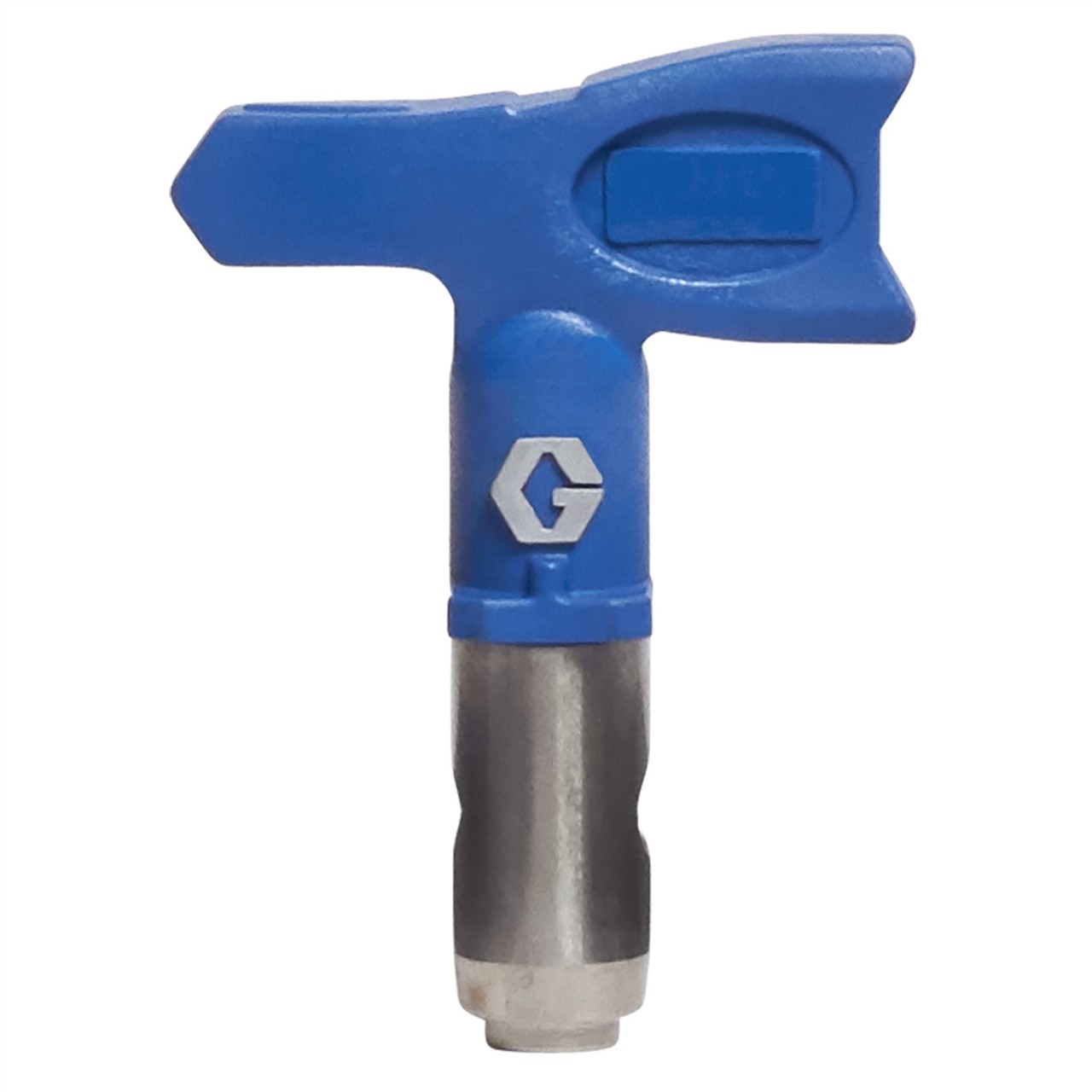
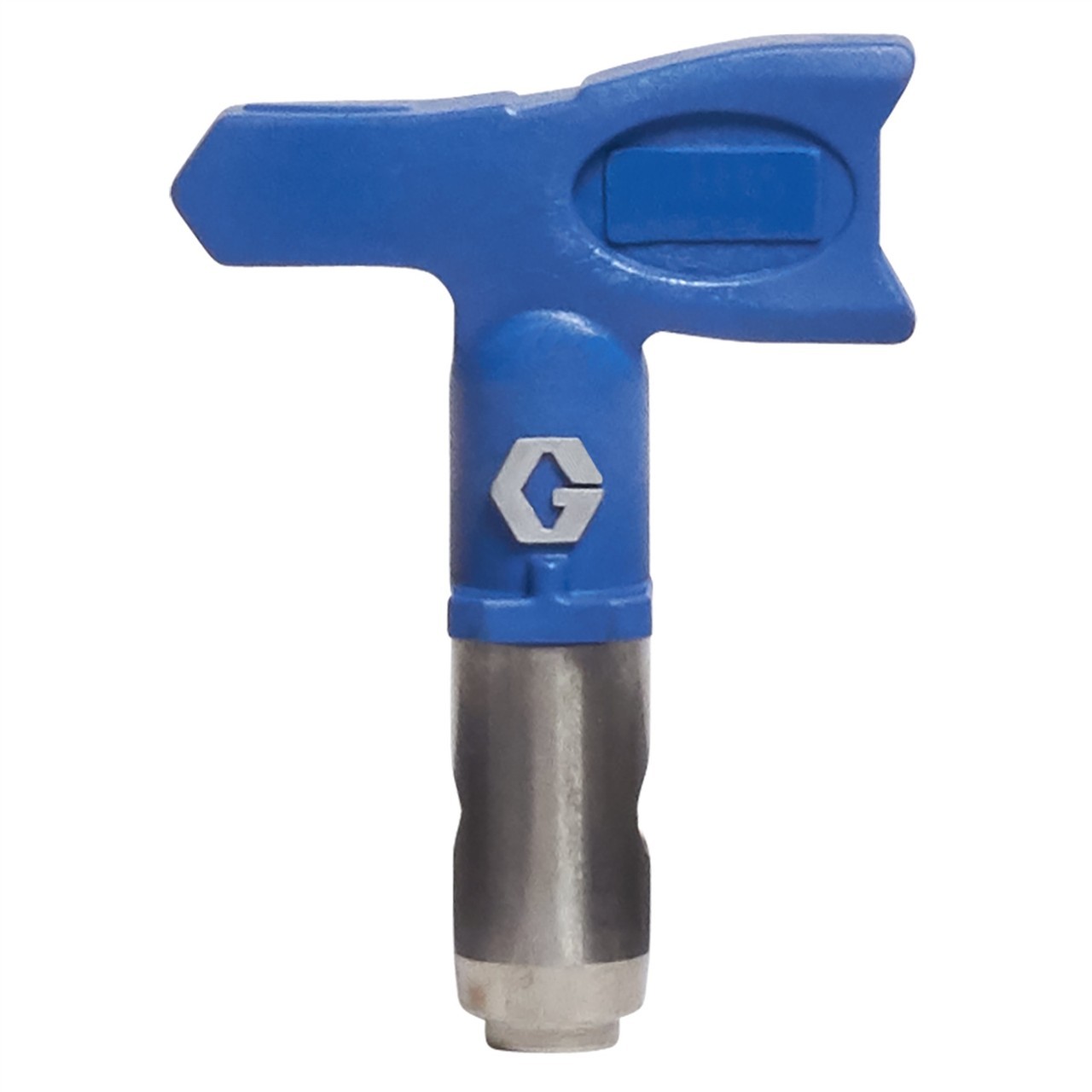
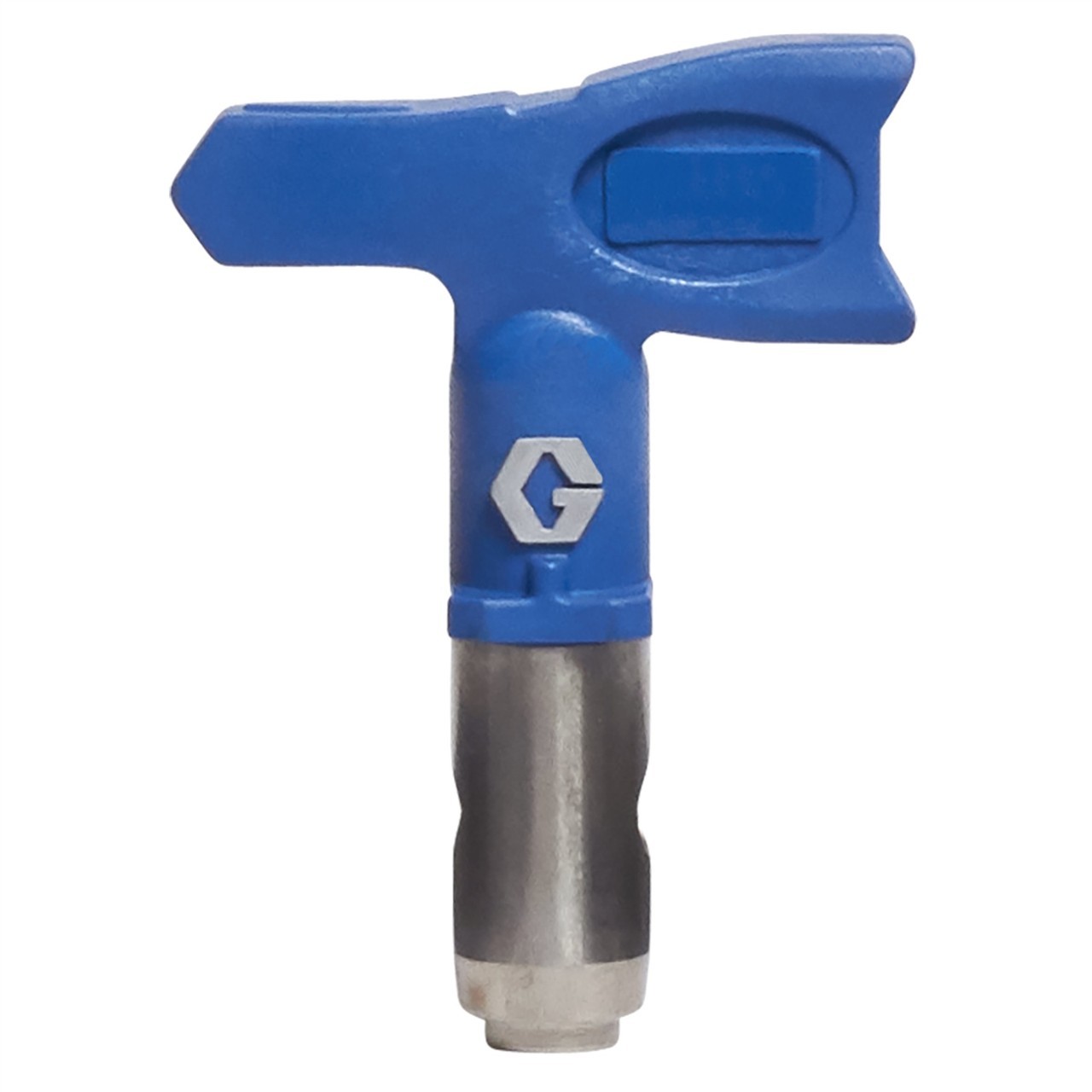
LTX: standard RAC X SwitchTip
The general purpose tip and the one most painters own. Handles latex, primers, enamels and stains across the full size range.
Best for: everyday wall, ceiling and exterior work. Price: $40.92 each. Examples: LTX211 LTX317 LTX415 LTX511
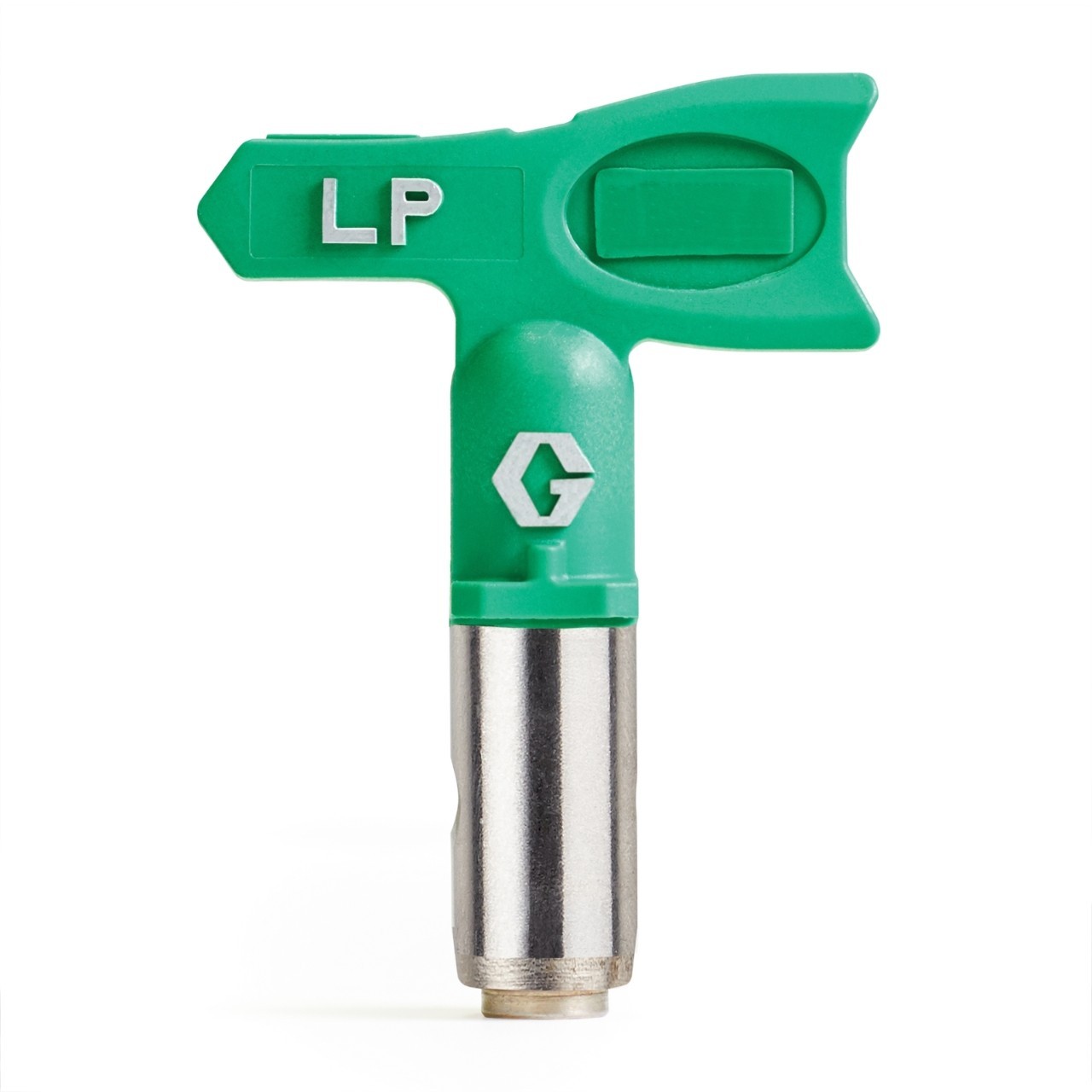
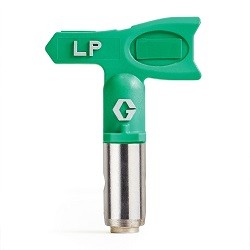
LP: low pressure RAC X
Atomizes properly at meaningfully lower pressure than a standard tip. Lower pressure means less overspray, less wasted material, and less wear on your packings and valves every hour the machine runs.
Best for: anyone running a sprayer weekly, where the reduced pump wear adds up. Price: $51.44 each. Examples: LP313 LP315 LP515
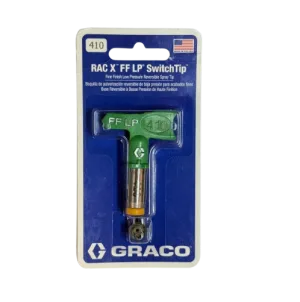
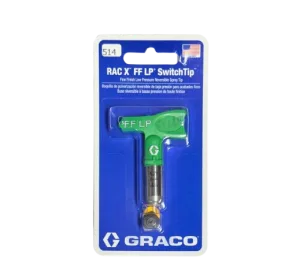
FFLP: fine finish low pressure
A low pressure tip with a pre-orifice that produces a softer, finer spray. The closest airless gets to an HVLP style finish while keeping airless speed.
Best for: cabinets, doors, trim and millwork where finish quality matters. Price: $51.44 each. Examples: FFLP310 FFLP410 FFLP514
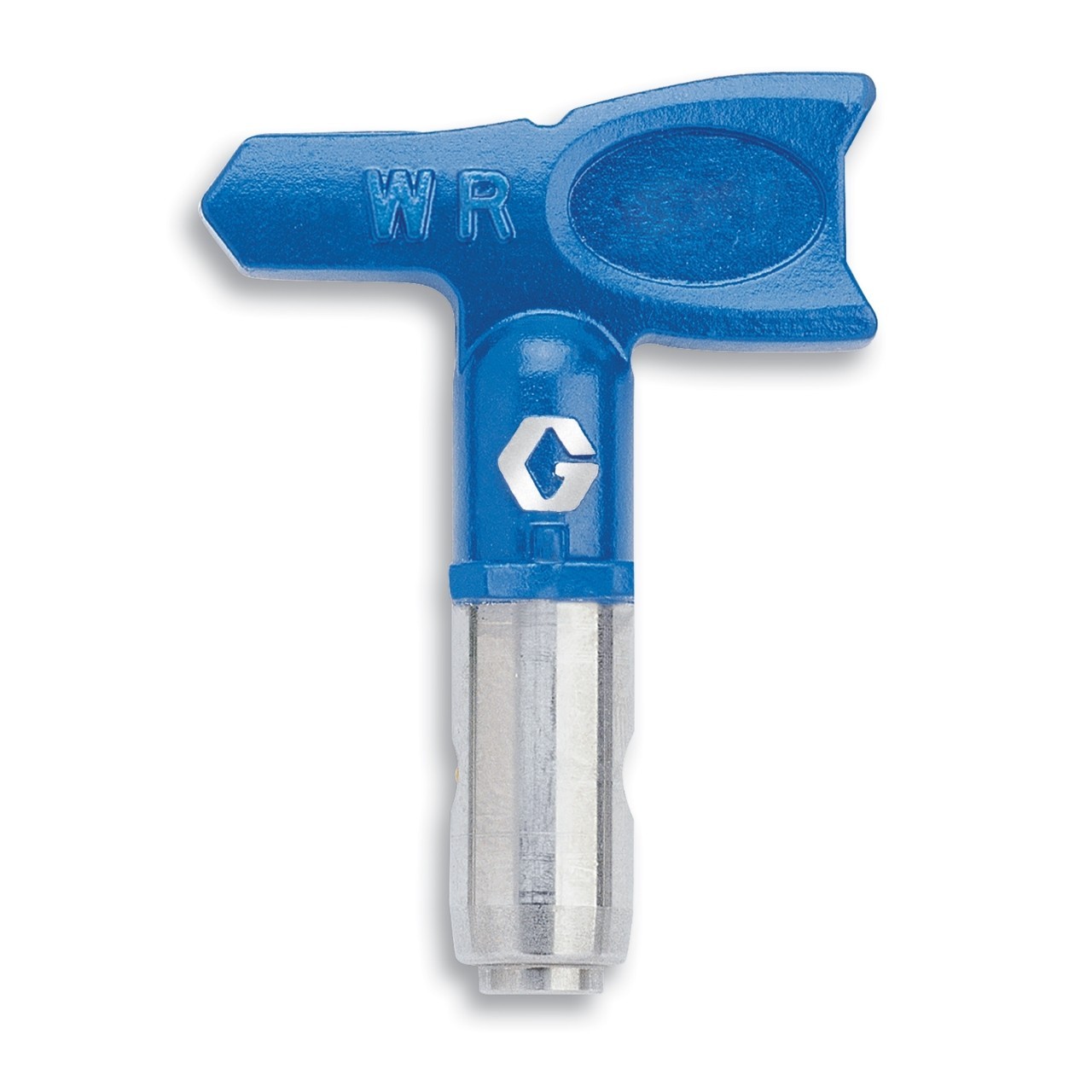
WR: WideRAC
Very wide fan patterns, up to 24 inches, for covering large flat areas fast. Needs a pump with enough output to feed the larger orifices.
Best for: warehouse walls, commercial ceilings, new construction. Price: $46.83 each. Examples: WR1229 WR1239
LP and FFLP tips cost about $10 more than an LTX. On a machine you run every week, the lower operating pressure takes enough strain off the packings and valves that the tip difference is usually recovered in avoided wear within a season, before you count the paint you are no longer throwing into the air as overspray. It is one of the few upgrades in this catalog where we would say that without hedging.
7. Guards and Compatibility
A tip does not thread directly onto the gun. It sits in a guard, and the guard threads onto the gun. That means the guard decides which tips you can use.
- RAC X tips need a RAC X guard, often called the HandTite guard, which tightens by hand without tools. Any gun fitted with a RAC X guard accepts the full LTX, LP, FFLP and WideRAC range.
- Older guard systems are not interchangeable. Guns fitted with older RAC style guards take tips designed for those guards. If you inherited an older gun, check the guard before buying tips.
- Some homeowner and handheld guns use their own tip systems. Check your specific gun's guard rather than assuming RAC X fits.
- The seal matters. A worn or missing tip seal in the guard causes spitting and leaks at the tip even with a brand new tip fitted.
The guard also does a safety job. It keeps your fingers away from the spray stream, which at airless pressures can inject through skin. Never spray with the guard removed, and never try to clear a clog by pointing the tip at your hand. Rotate the tip to the reverse position and spray into waste instead. That is what the RAC design is for.
Not sure which guard or gun you have? Compare against the parts diagram for your machine, or browse Graco airless spray guns.
8. When a Tip Is Worn Out
Tips wear from the inside. Paint contains solid particles, and forcing them through a tiny opening at thousands of PSI slowly enlarges that opening. The counterintuitive result is that a worn tip sprays a narrower fan, not a wider one, while putting out more paint.
The two minute wear test
- Spray a pass onto cardboard with the old tip, gun held twelve inches away.
- Spray a pass with a new tip of the same size at the same pressure and distance.
- Measure both fan widths.
If the old tip's fan is noticeably narrower, it is worn. The usual guideline is to replace a tip once it has lost a couple of inches of fan compared with new.
Other signs
- Using more paint than usual to cover the same area
- Runs appearing where they did not before, because more material is going on per pass
- Having to turn the pressure up to get a clean pattern
- Tails or fingers at the fan edges that pressure no longer fixes
Typical tip life falls somewhere between 15 and 40 gallons. Abrasive materials like primers, block fillers and elastomerics sit at the low end. Clean latex sits at the high end. Running at lower pressure, or using an LP tip, extends it.
A worn tip does not just look worse. Its larger orifice pulls more paint than the pump was set up to feed, so you use more material, and you turn the pressure up to compensate, which works the pump harder. A $41 tip past its life is quietly costing you in paint and pump wear on every job until you replace it.
9. Six Tip Mistakes That Cost Money
- Buying one size over the sprayer's maximum. The most expensive tip mistake, because the cost shows up months later in the pump.
- Choosing a narrower fan for control without dropping the orifice. Same paint, less area, heavier coat, runs.
- Turning up the pressure to fix a worn tip. It masks the symptom and adds pump wear. Replace the tip.
- Running at maximum pressure all the time. Use the lowest pressure that gives a clean pattern with no tails. Everything above that is wear and overspray.
- Ignoring the tip seal. A new tip in an old guard seal still spits.
- Cleaning the orifice with a pin or wire. It scratches the precisely formed opening and ruins the pattern. Reverse the tip to clear clogs, and soak it in the correct cleaner if needed.
Graco RAC X SwitchTips
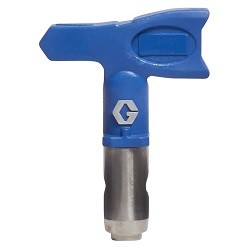
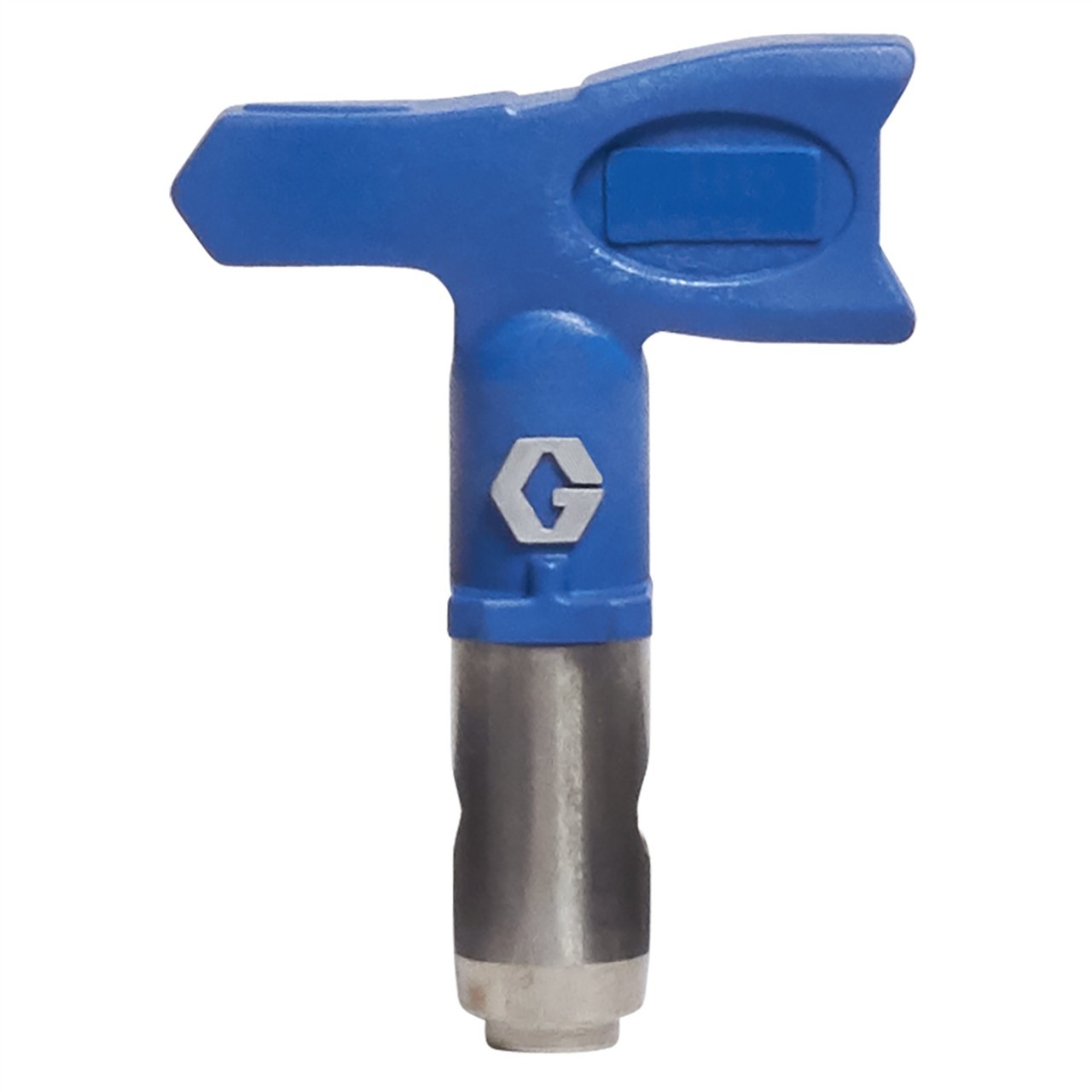
 −37%
−37%
 −37%
−37%
 −37%
−37%

10. Frequently Asked Questions
How do you read a Graco spray tip size?
Graco tip numbers have two parts. The first digit, doubled, is the fan width in inches measured twelve inches from the surface. The last two digits are the orifice diameter in thousandths of an inch. A 517 tip sprays a 10 inch fan through a 0.017 inch orifice. The letters in front, such as LTX, FFLP, LP or WR, identify the tip family.
What size spray tip should I use for latex paint?
Most interior and exterior latex sprays well through a 0.015 to 0.019 inch orifice. A 515 or 517 is the common starting point for walls. Choose the smaller end for thinner latex and for interior work, the larger end for thick exterior latex, and never exceed the maximum tip size your sprayer is rated for.
What is the biggest tip my sprayer can use?
Every airless sprayer has a published maximum tip size, found in its manual and spec sheet. That maximum reflects the pump's flow rate: a tip that asks for more material per minute than the pump can deliver will spray a weak, tailed pattern and strain the pump. The Magnum X7, for example, is rated for tips up to 0.017 inches.
Does fan width change how much paint comes out?
Not significantly. Flow is controlled by orifice size, not fan width. A 317 and a 517 deliver roughly the same amount of paint per minute because both have a 0.017 inch orifice. The 517 spreads it across a 10 inch fan and the 317 across a 6 inch fan, so the narrower tip lays a heavier coat per pass.
How often should I replace a Graco spray tip?
Replace a tip when its fan has narrowed noticeably compared with a new tip of the same size, typically after somewhere between 15 and 40 gallons depending on the material. Abrasive coatings like primers and elastomerics wear tips faster than standard latex. A worn tip lays down more paint over less area, which wastes material and shortens pump life.
Tell Us the Machine and the Material
We will recommend the right tip size and family for the job, and tell you if your sprayer cannot run it.
Ask Our Parts Team Browse All Tips