Most Graco pumps that people replace did not need replacing. They needed seals. Paint weeping around the packing nut, pressure that will not hold, pulsation during spraying: all three normally trace to worn throat packings and O-rings, and the parts cost between $0.30 and $75 depending on your machine. Replace the seals first. Only replace the pump if the cylinder bore or displacement rod is scored, because new seals cannot seal against a damaged surface.
There is a conversation we have regularly. Someone calls about buying a replacement pump because theirs is leaking, and after a couple of questions it becomes clear the pump is fine. The seals inside it are worn. We sell them a packing kit instead, which is a much smaller sale, and they keep the machine for several more years.
That is what this page is about. Seals are the cheapest components in an airless sprayer and the ones whose failure most often gets misread as something expensive.
1. The Repair Cost Ladder: Where to Start
When a pump misbehaves, there is a ladder of possible responses. Almost everyone should start at the bottom and only climb if the step below genuinely did not fix it.
Step 1: Individual seals and O-rings, under $10
A single O-ring, a gland packing, a check ball or a spring. Fixes a specific leak at a specific point. Examples: 103338 packing O-ring at $8.00, 176757 female gland packing at $8.69, 115099 inlet seal washer at $0.30.
Step 2: A valve kit, $55 to $60
If the problem is priming or pressure rather than a visible leak, the check valves are usually the cause. 16E844 inlet valve kit at $59.15 or 16E845 outlet valve kit at $55.68 on Magnum class machines.
Step 3: A full fluid section packing kit, around $75
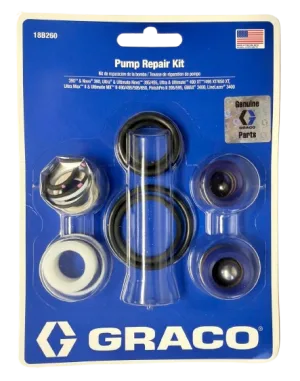
Every seal in the pump at once. On contractor machines this is the 18B260 kit at $74.62, which covers the whole 390 to 595 family. This is the step that saves most pumps people were about to replace.
Step 4: A replacement pump lower, several hundred dollars
Correct only when the cylinder or displacement rod is damaged rather than the seals. Verify the surfaces before you spend here.
Step 5: A new machine, several hundred to several thousand
Correct when the machine has multiple failed systems at once, or when a homeowner grade unit has accumulated repairs approaching half its replacement cost.
Steps 4 and 5 are bigger sales for us. We still think most people calling about them belong on step 1, 2 or 3. If you tell us the symptom, we will tell you which step you are actually on, including when it is the cheap one. That is not generosity, it is just how you keep a customer for ten years instead of one transaction.
2. What Seals Actually Do Inside the Pump
An airless pump is a rod moving up and down inside a cylinder, pressurizing paint on each stroke. Seals exist at every point where that pressurized paint could escape or where a moving part meets a stationary one.
Throat packings
Stacked seals surrounding the displacement rod where it enters the top of the cylinder. This is the hardest working seal in the machine, because the rod is sliding through it thousands of times per hour while paint pushes against it from below. Throat packings are usually a stack of leather and UHMW polyethylene rings, alternating, because the two materials do different jobs.
Piston packings
Seals on the piston itself, lower in the cylinder, creating the pressure differential that moves material. When these wear, material bypasses the piston instead of being pushed forward, so the pump cycles without producing pressure.
Gland packings and nuts
The male and female glands compress the packing stack and hold it in position. They are why the packing nut can be tightened to take up small amounts of wear. Examples: 176757 female gland packing and 176754 male gland packing.
O-rings throughout the fluid path
Static seals at joints, valve housings and fittings. They do not slide, so they fail from chemical attack and compression set rather than friction. Solvent exposure during cleaning is the main cause.
Check ball seats
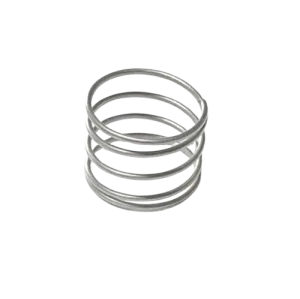
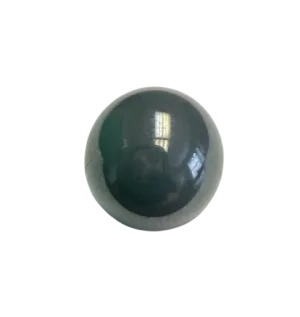
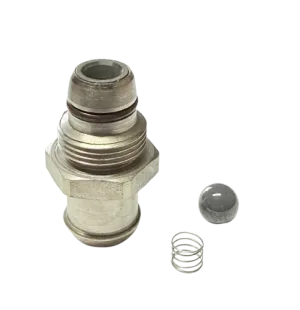
Not seals in the rubber sense, but they perform the same job. A hardened ball seating against a machined surface closes the flow path. Examples: 124249 ceramic ball at $7.30 with its 123849 spring at $0.80.
3. Reading the Symptom: Which Seal Failed
Paint weeping around the packing nut
Fluid appearing at the top of the pump where the rod enters, usually as a slow seep that gets worse through a working day.
Cause: Worn throat packings. Fix: Full packing kit. Do not keep spraying through it, because paint escaping past the rod carries grit that scores the rod, which turns a $75 repair into a pump replacement.
Pump cycles but pressure stays low
The motor runs, the rod moves, but the gauge never reaches working pressure or drifts down.
Cause: Piston packings bypassing, or a worn check valve. Check first: Valve kit, since it is the cheaper of the two and easier to inspect. Then: full packing kit.
Pulsation during spraying
Visible surging in the spray pattern, or a pump that runs in uneven bursts rather than smoothly.
Cause: Partial bypass past worn packings, or a check ball not seating cleanly. Fix: Packing kit, or ball and seat if the pattern is otherwise fine.
Will not hold prime when idle
The machine primes, then loses prime after sitting a few minutes.
Cause: Inlet check ball or seat not sealing, often dried material rather than wear. Check first: Clean the ball and seat. Then: inlet valve kit.
Leak at a fitting or hose connection
Fluid at a joint rather than at the pump itself.
Cause: O-ring or seal washer, usually under $10. Note: a leak at a pressurized fitting is a safety issue, not a nuisance. Fix it before the next job rather than after.
4. The Packing Nut Question
Almost every airless pump lets you tighten the packing nut to take up wear in the throat packings. This is a designed in adjustment, not a workaround, and using it is correct.
What matters is knowing when it stops being the answer. A useful test: if a quarter turn holds for a full working day, the packings still have life. If you are reaching for the wrench more than once a day, or if tightening only buys an hour, the packings are worn out rather than loose, and further tightening does damage.
Cranking the nut down on worn packings squeezes them harder against the displacement rod. That increases friction, generates heat, and accelerates wear on the rod surface. A scored rod cannot be sealed by any new packing, so this is the specific mistake that turns a cheap seal job into a pump replacement. Tighten to take up normal wear, not to suppress a genuine leak.
5. Which Kit Fits Your Machine
Contractor electric and gas sprayers
The Graco 18B260 fluid section packing kit at $74.62 is the workhorse here, covering the Endurance style pumps across a wide range of machines. It replaces the older 244194 kit.
| Kit | Covers | Replaces | Price |
|---|---|---|---|
| 18B260 | 390, Nova 390, Ultra 395, 495, 595, Ultra Max II 490, 495, 595, FinishPro 390, 395, 595, STX, ST Pro, 295 ST, GMax 3400, LineLazer 3400, FieldLazer S100 | 244194 | $74.62 |
Magnum and homeowner class sprayers
These use valve kits rather than a single fluid section kit. The 16E844 inlet valve kit at $59.15 and the 16E845 outlet valve kit at $55.68 cover most priming and pressure faults on the Magnum range. Handheld units commonly need the 16Y425 O-ring.
Fluid section designs change between production runs without the model name changing. Check the fluid section page of your machine's parts manual and confirm it lists your kit number, or match the callout visually using the parts diagram lookup. Manuals are in our technical data library. If you are unsure, send us your model and serial and we will confirm it rather than let you guess.
Not Sure Which Kit Fits?
Send your model and serial number. We will confirm the right kit before you order.
Find My Part by Diagram Call +1 713-931-41026. Individual Seals Worth Stocking
Not every seal failure justifies a full kit. These are the individual items worth having in a drawer, all of them cheap enough that the decision is easy.
| Part | Number | What it seals | Price |
|---|---|---|---|
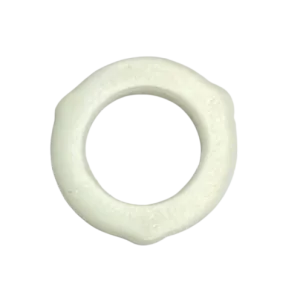
| Inlet seal washer | 115099 | Garden hose connection at the inlet | $0.30 |
| Compression spring | 123849 | Holds the inlet check ball on its seat | $0.80 |
| Ceramic check ball | 124249 | Inlet valve sealing surface | $7.30 |
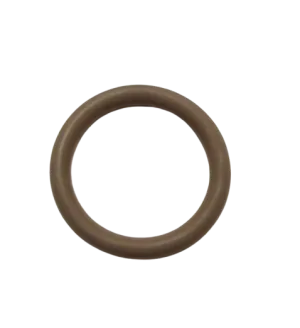
| Packing O-ring | 103338 | Inlet valve housing | $8.00 |
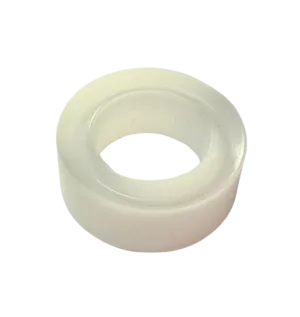
| Female gland packing | 176757 | Compresses the throat packing stack | $8.69 |
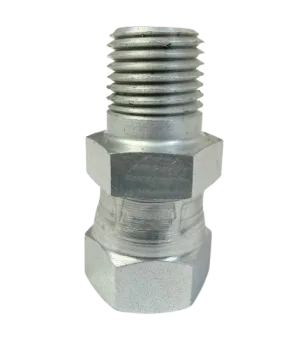
| Swivel fitting, 1/4 in union | 156823 | Hose to gun connection | $9.70 |
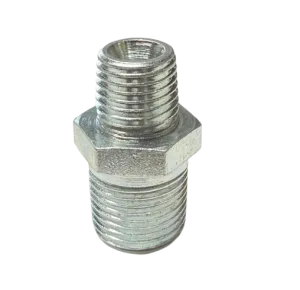
| Hose fitting nipple, 1/4 x 3/8 NPT | 157350 | Hose to manifold connection | $12.80 |
Two of those, the swivel fitting and the nipple, are among our best selling parts. That is not a coincidence. Fittings get overtightened, cross threaded and knocked about more than anything else on a sprayer, and they are almost always the cheapest thing you could have replaced before the leak started.
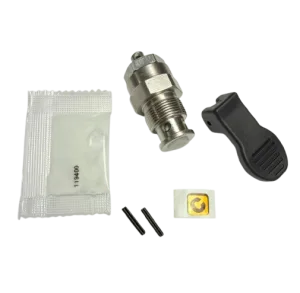
Seals, O-Rings and Packing Kits
 −30%
−30%

7. When Seals Will Not Save It
Being straight about the limits of this repair is more useful than pretending seals fix everything.
New packings seal against the displacement rod and the cylinder bore. If either surface is damaged, the seal has nothing to seal against and the repair fails almost immediately. Before fitting a kit, inspect both.
- Run a fingernail along the displacement rod. It should feel glass smooth. Any groove, ridge or rough patch you can catch a nail on means the rod is scored.
- Look into the cylinder bore in good light. Vertical scratches, pitting or a visible step where the piston travels are all disqualifying.
- Check for corrosion. A machine stored wet or stored with water based material still inside can pit internally, and pitting behaves like scoring.
If you find any of these, the fluid section needs replacing rather than resealing. That is a genuinely different repair, and fitting a $75 kit to a scored pump wastes both the kit and the afternoon. Our pumps, pistons and cylinders section covers replacement fluid sections.
On a homeowner machine, repairs stacking toward half the price of a new unit is the point to stop. On a contractor machine the threshold is far higher, because a steel Endurance style fluid section is designed to be rebuilt repeatedly and routinely is. On industrial equipment, rebuilding is almost always correct. Tier changes the maths considerably, so do not apply homeowner logic to a contractor pump.
8. Making the New Seals Last
Most premature seal failure is caused by how the machine is treated rather than by the seals themselves.
- Flush immediately after every use, not at the end of the day. Material left to dry in the fluid section is abrasive on the next startup and takes seal life with it.
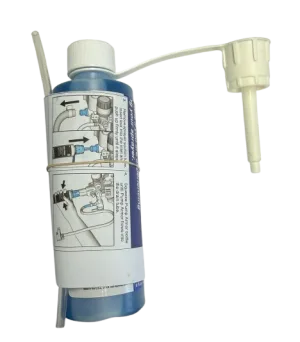
- Use pump storage fluid for any idle period over a few weeks. Pump Armor at $8.40 is the cheapest insurance on the machine. Dry storage kills more homeowner pumps than wear does.
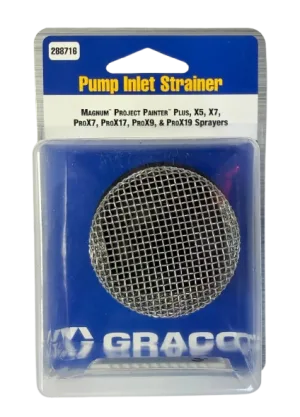
- Keep the inlet strainer clean. The 288716 strainer at $10.00 exists to keep grit away from the seals. Grit reaching the pump is the single fastest way to destroy new packings.
- Lubricate packings on install as the manual specifies, and observe orientation. Packing rings are directional, and fitting one upside down costs you the whole kit.
- Do not over-thin material to the point where it stops carrying lubrication through the pump. Some thinning is fine, and excessive thinning increases wear.
- Torque to spec. Both under and over tightening the packing nut shorten seal life, in different ways.
Done consistently, these push seal intervals meaningfully longer. Skipped, they can halve them.
9. Frequently Asked Questions
What are throat packings on a Graco sprayer?
Throat packings are stacked seals that surround the displacement rod where it enters the top of the pump cylinder. They keep pressurized material from escaping past the rod. When they wear, paint or solvent weeps around the packing nut, and pressure becomes harder to hold.
How do I know if my Graco pump needs a packing kit?
The clearest signs are fluid leaking around the throat packing nut, a gradual loss of pressure, pulsation during spraying, or finding yourself tightening the packing nut more often than you used to. If tightening the nut fixes it only briefly, the packings are worn rather than loose.
Which Graco packing kit fits the 390, 395, 495 and 595?
The 18B260 fluid section packing kit covers the Endurance-style pumps used across the Graco 390, Ultra 395, 495 and 595, Ultra Max II 490, 495 and 595, FinishPro 390, 395 and 595, STX, ST Pro, 295 ST, Nova 390, GMax 3400, LineLazer 3400 and FieldLazer S100. It replaces the older 244194 kit. Always confirm against your model's parts manual and serial range.
Can I just tighten the packing nut instead of replacing packings?
Tightening the packing nut is a legitimate short term adjustment and is designed into the pump. It stops working once the packings have genuinely worn, and over-tightening accelerates wear on the displacement rod. If a quarter turn no longer holds for a full day, replace the packings rather than continuing to tighten.
Is it cheaper to rebuild a Graco pump or replace it?
Rebuilding with a packing kit is dramatically cheaper than replacing a pump, and on contractor grade machines a well maintained fluid section can be rebuilt repeatedly. Replacement becomes the better option when the cylinder bore or displacement rod is scored, because new seals cannot seal against a damaged surface.
Describe the Leak, We Will Name the Part
Model number, where it is leaking, and a photo. We will tell you which step of the ladder you are on.
Ask Our Parts Team Browse Pump Repair Kits