
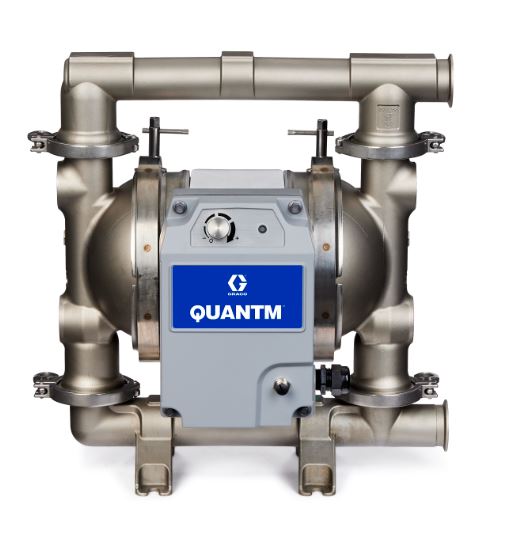
Electric QUANTM double diaphragm pump designed for efficient, airless transfer of industrial, chemical, and sanitary fluids with stable flow control and reduced energy consumption.
| Machine / System Type | Function | Integration Notes |
|---|---|---|
| Spray Foam Proportioning Systems | Material supply pump | Maintains continuous resin and chemical flow delivery |
| Industrial Chemical Processing Systems | Transfer and circulation pump | Handles aggressive fluids with stable electric operation |
| Food & Beverage Production Lines | Sanitary fluid transfer | Compatible with hygienic stainless steel piping systems |
| Cosmetic Manufacturing Equipment | Ingredient dosing system pump | Ensures precise flow for emulsions and viscous materials |
| Pharmaceutical Processing Skids | Controlled fluid transfer | Supports CIP systems and regulated production environments |
The Graco HE80-0679 QUANTM Pump (QHD-FGFF4SSSPSPEPS140021) is an electric double diaphragm pump designed for efficient, airless transfer of industrial, chemical, and sanitary fluids. It belongs to Graco’s QUANTM series, which replaces traditional air-operated diaphragm technology with an advanced electric drive system for improved efficiency and reduced operational costs.
Constructed with a 316 stainless steel wetted section and a chemical-resistant PTFE diaphragm system, this pump delivers reliable performance in demanding continuous-duty environments while minimizing maintenance and energy consumption.
This model is a 1.5-inch electric double diaphragm pump capable of delivering up to approximately 80 GPM (303 L/min). It is designed for consistent, controlled fluid transfer in medium to high-volume industrial applications.
It is commonly used in systems requiring precise dosing, chemical compatibility, and elimination of compressed air infrastructure for improved operational efficiency and stable performance.
The HE80-0679 is widely used in chemical manufacturing, food and beverage processing, cosmetics production, and pharmaceutical systems where hygienic handling, accuracy, and consistent fluid transfer are critical requirements.